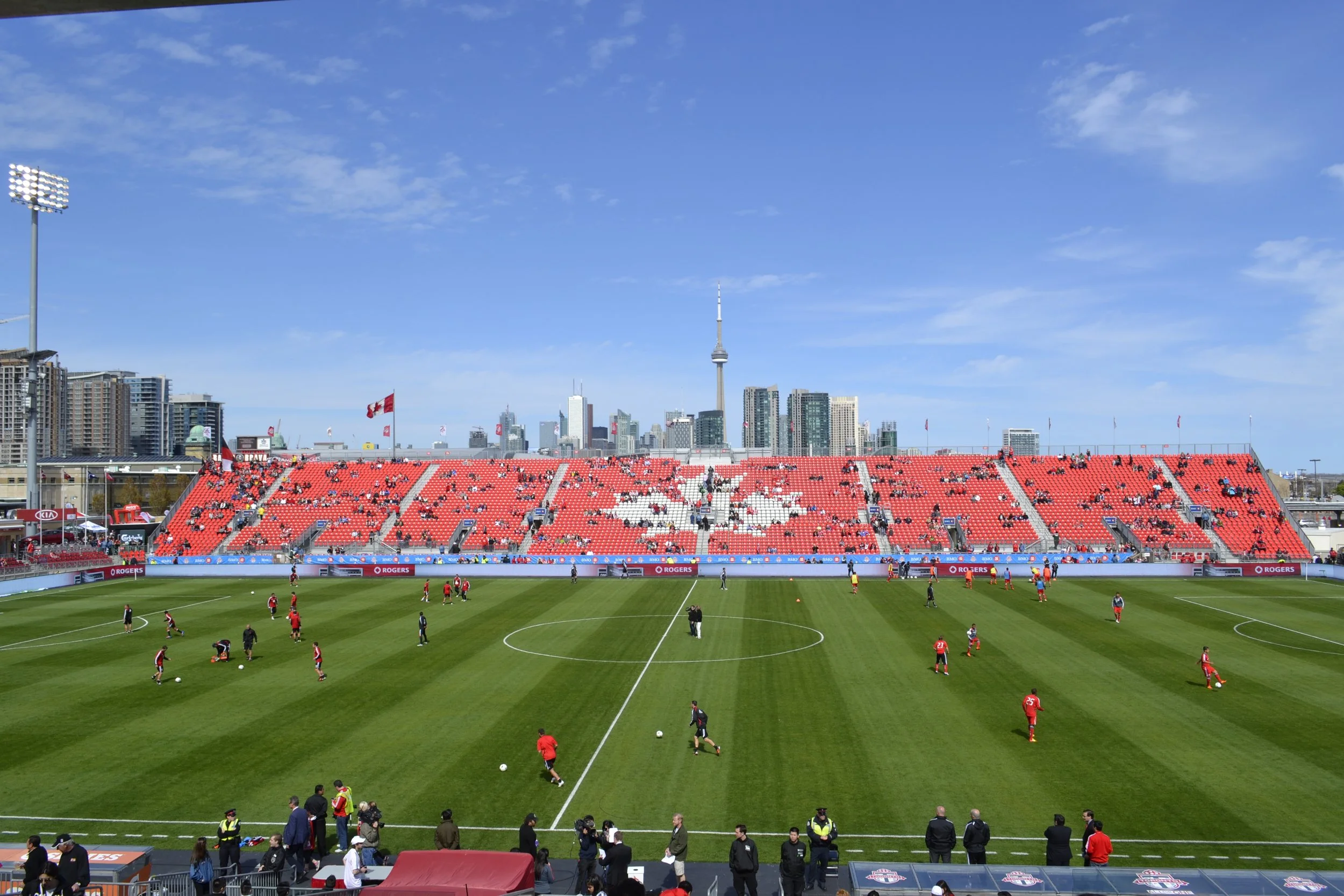
BMO Field
Location: Toronto, Ontario, Canada
Matches Hosted: 6
Expanded Capacity: 45,000
Transit Access: TTC, GO Transit, Waterfront Trail
Key Sustainability Feature: Hybrid grass pitch system
World Cup Name: Toronto Stadium

Stadium Overview:
Known as Toronto Stadium during the FIFA World Cup 2026™, BMO Field will host six matches during the tournament, including Canada’s historic opening match on home soil. Originally opened in 2007, the stadium is Canada’s first soccer-specific stadium and sits along Toronto’s waterfront at Exhibition Place.
As part of its modernization and World Cup preparation efforts, BMO Field has incorporated several energy-efficiency upgrades, including:
New LED video boards
Enhanced lighting and audiovisual systems
Expanded hospitality areas
Improved connectivity and infrastructure
Temporary seating additions for FIFA requirements
Sustainability & Climate Highlights:
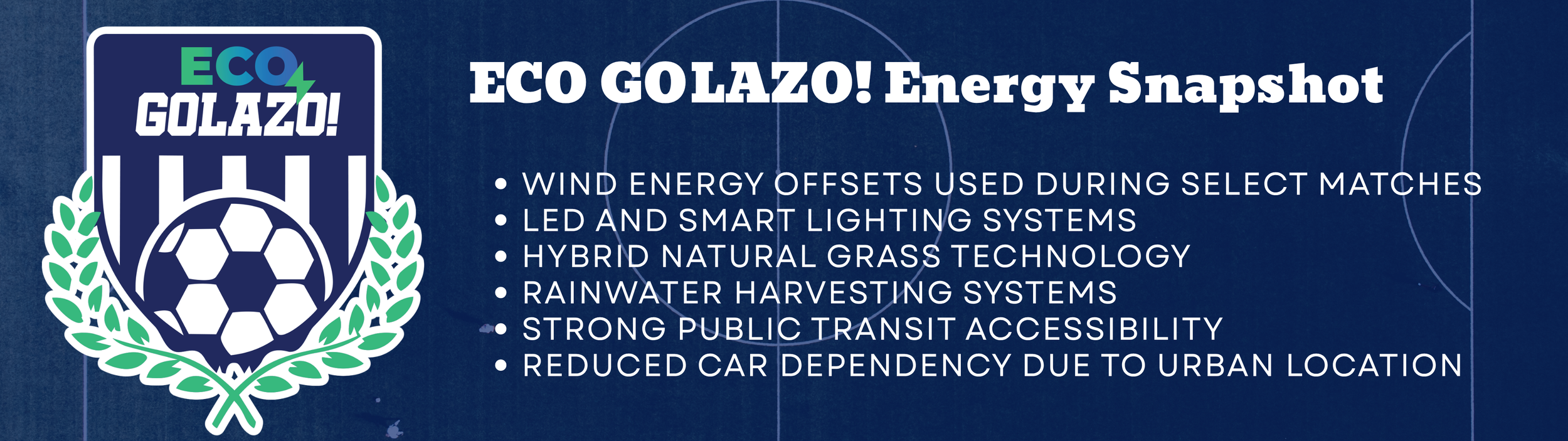
Hybrid Grass Field System
One of the most notable sustainability-related upgrades at BMO Field is its advanced hybrid grass system, designed to improve field durability while reducing excessive turf replacement and maintenance needs. The stadium combines natural grass with synthetic reinforcement technology to maintain high-quality playing conditions through heavy use and changing weather conditions. This system helps:
Improve water efficiency
Extend field lifespan
Reduce waste from repeated turf replacement
Maintain healthier natural grass coverage
Transit & Urban Connectivity
One of BMO Field’s biggest environmental advantages is its location within a dense urban core and its strong public transportation access. Fans can reach the stadium through:
Toronto streetcars (TTC)
GO Transit regional rail
Bike and pedestrian waterfront trails
Downtown transit connections
Unlike more car-dependent stadiums, BMO Field benefits from being embedded within an existing transit network, helping reduce transportation-related emissions from major events.