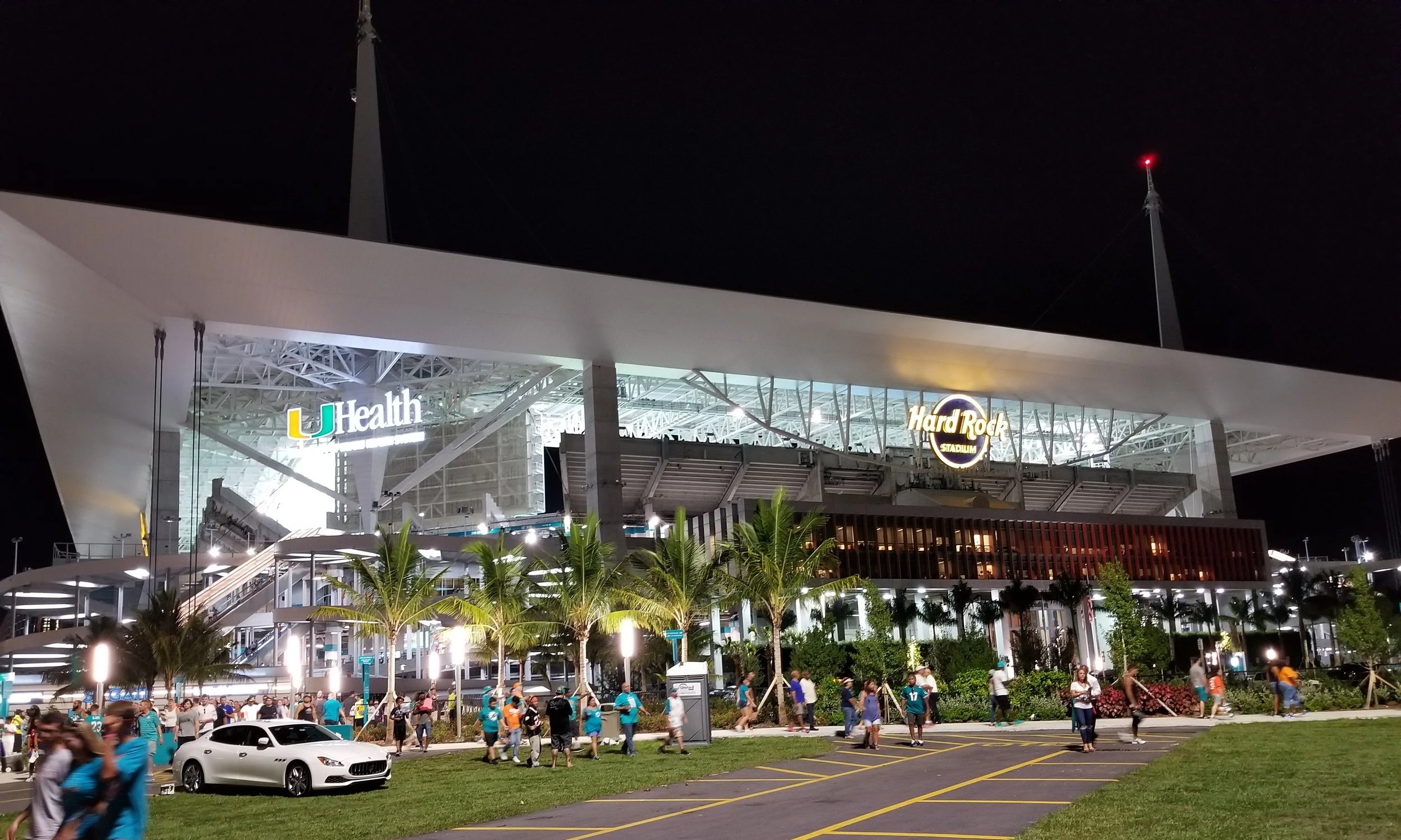
Miami Stadium “Hard Rock Stadium”
Location: Miami Gardens, Florida, United States
Matches Hosted: FIFA World Cup 2026™ matches
Stadium Capacity: Approximately 65,000
Transit Access: Regional transportation networks and event mobility planning
Key Sustainability Feature: LEED Gold certification and elimination of 99.4% of single-use plastics
World Cup Name: Miami Stadium
Stadium Overview:
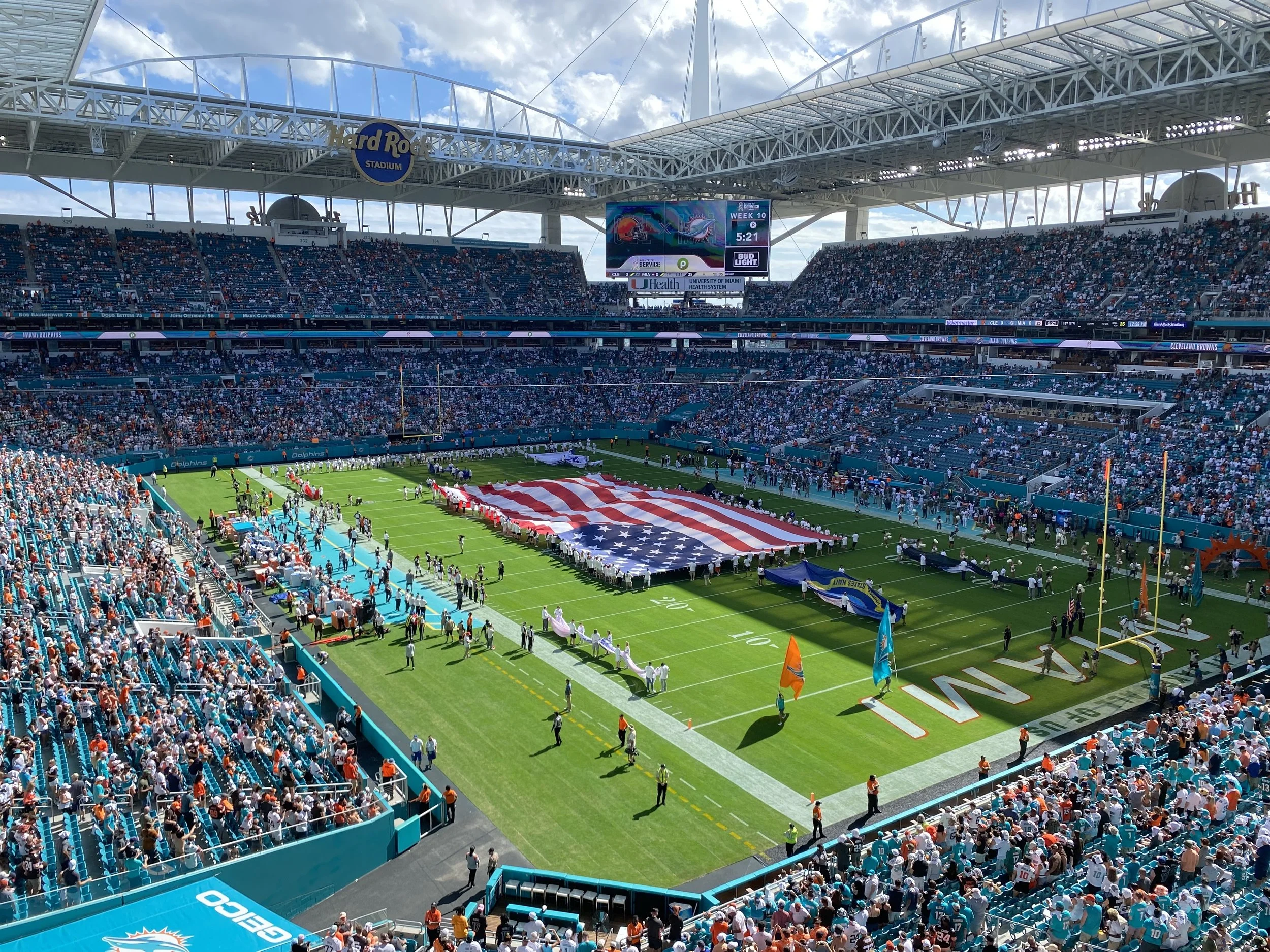
Known as Miami Stadium during the FIFA World Cup 2026™, Hard Rock Stadium is one of the premier sports and entertainment venues in the United States. Home to the Miami Dolphins, the Miami Open, Formula 1 Miami Grand Prix, and numerous international events, the stadium has become a leader in sustainable venue operations and environmental stewardship.
Through investments in renewable energy, water conservation, waste reduction, and sustainable event management, Hard Rock Stadium has demonstrated how major entertainment venues can reduce their environmental footprint while serving millions of visitors each year. Key features include:
Water conservation systems
Comprehensive recycling and waste diversion programs
Sustainable event operations
Climate-conscious infrastructure
Environmental certification and reporting initiatives
Sustainability & Climate Highlights:
While Hard Rock Stadium does not utilize a large rooftop solar array due to South Florida's strict hurricane-resilience requirements and the engineering demands of its open-air canopy, the venue has invested heavily in energy efficiency.
One of the stadium's most impactful improvements was the installation of advanced LED field lighting systems, which reduced energy consumption by as much as 75% compared to traditional lighting technologies.
Benefits include:
Reduced electricity consumption
Lower greenhouse gas emissions
Improved operational efficiency
Longer equipment lifespan
Reduced maintenance requirements
These upgrades demonstrate how energy efficiency can be one of the most effective tools for reducing a venue's environmental footprint.
Turning Waste Into Renewable Energy
Hard Rock Stadium has implemented innovative waste management programs that transform food-service byproducts into useful resources.
Recovered cooking oil from stadium operations is converted into renewable biofuel, helping reduce waste while supporting cleaner energy alternatives.
The venue also utilizes bio-digesters that process organic waste and support composting efforts.
These initiatives help:
Reduce landfill waste
Recover valuable resources
Support circular economy practices
Lower environmental impacts from food operations
Leading the Way on Plastic Reduction
One of Hard Rock Stadium's most impressive sustainability achievements is its commitment to reducing plastic waste.
The venue has eliminated 99.4% of single-use plastics from its food and beverage operations, dramatically reducing the amount of waste generated during major events.
This effort helps:
Reduce plastic pollution
Minimize landfill waste
Encourage sustainable consumption
Support long-term environmental stewardship
As millions of fans visit the venue each year, reducing disposable plastics can have a significant environmental impact.
LEED Gold Certification
These sustainability efforts have helped Hard Rock Stadium achieve LEED Gold certification, recognizing the venue's commitment to environmental performance and resource conservation.
The certification reflects investments in:
Energy efficiency
Waste reduction
Sustainable operations
Resource conservation
Environmental management
By integrating sustainability into everyday operations, Hard Rock Stadium demonstrates how large sports and entertainment venues can reduce their environmental footprint while continuing to host world-class events.