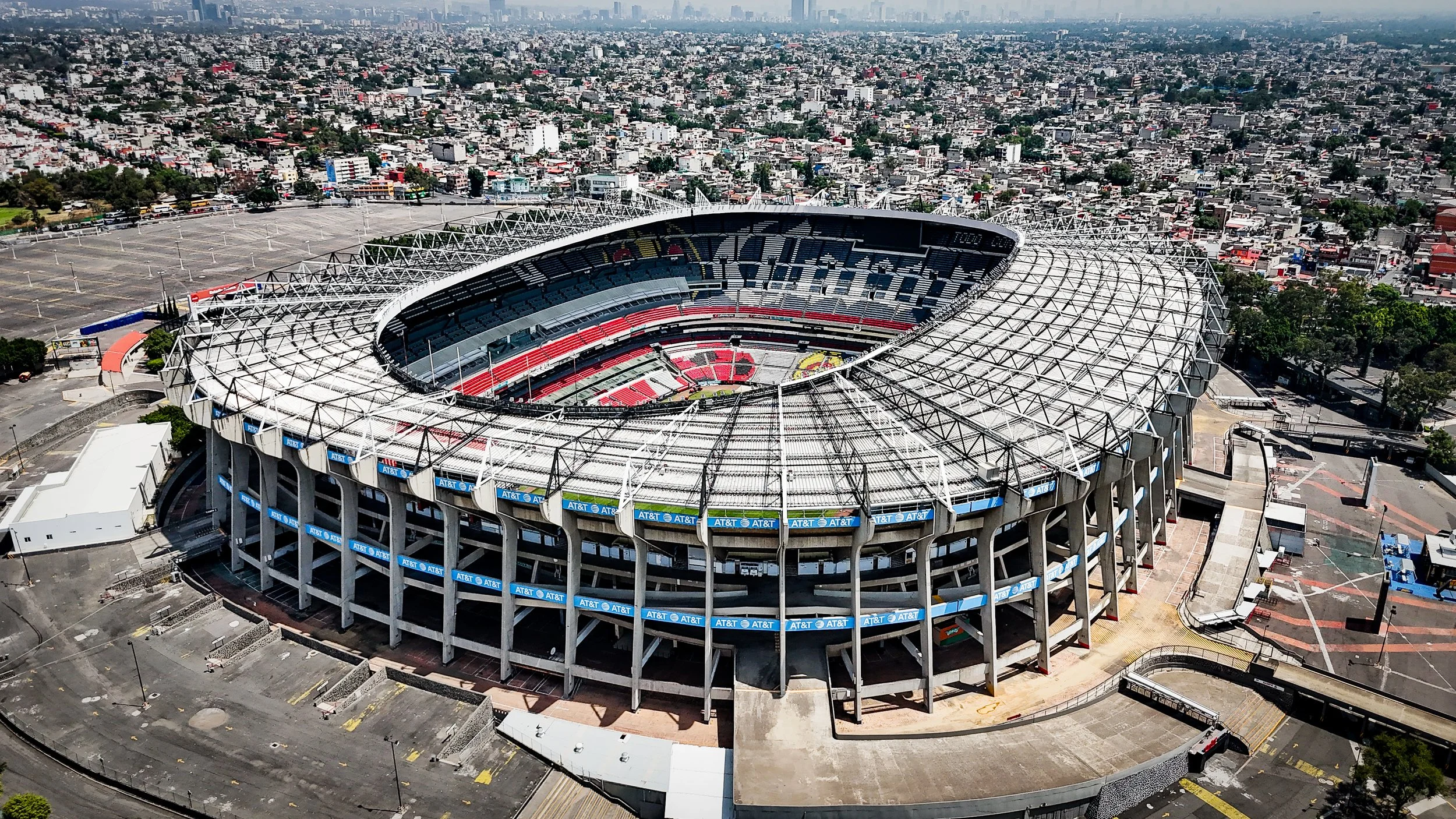
Mexico City Stadium “Estadio Azteca”
Location: Mexico City, Mexico
Matches Hosted: FIFA World Cup 2026™ matches, including the Opening Match
Stadium Capacity: Approximately 87,000
Transit Access: Metro, Metrobús, public bus systems
Key Sustainability Feature: Transit-oriented urban connectivity
World Cup Name: Mexico City Stadium
Stadium Overview:
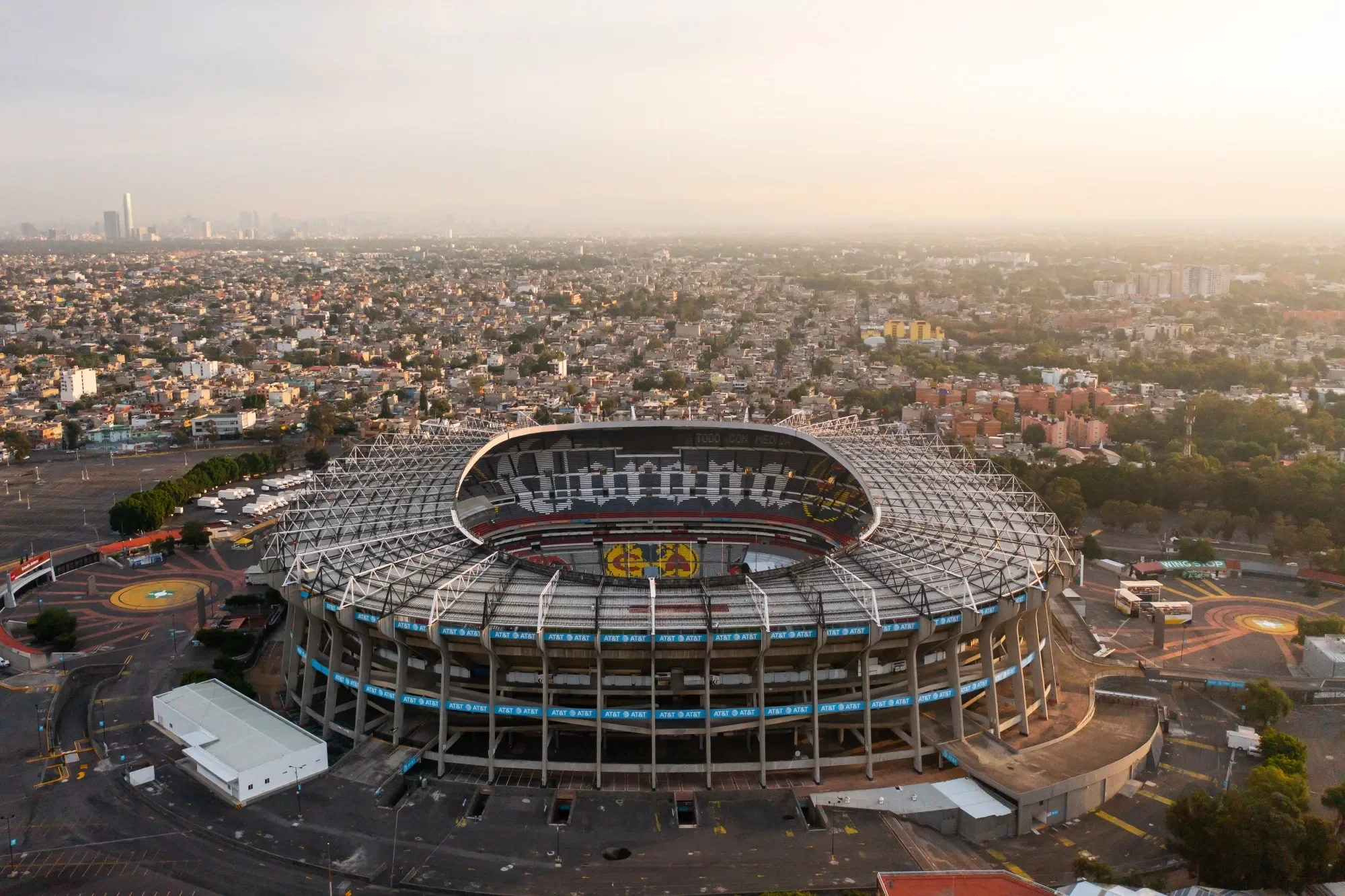
Known as Mexico City Stadium during the FIFA World Cup 2026™, the historic Estadio Azteca will once again become one of the tournament’s most iconic venues. Originally opened in 1966, the stadium has hosted some of the most memorable moments in soccer history, including two FIFA World Cup finals, making it the first stadium ever selected to host matches across three separate World Cups.
Located within one of the largest metropolitan areas in the world, Mexico City Stadium is undergoing modernization efforts ahead of the 2026 tournament, including:
Enhanced lighting and audiovisual systems
Improved hospitality and fan areas
Stadium modernization and operational improvements
Connectivity and transportation coordination efforts
Sustainability & Climate Highlights:
Coapan Rain Garden
One of the most innovative sustainability projects connected to Mexico City Stadium is the Coapan Rain Garden, developed through a partnership involving Coca-Cola México and local stakeholders.
The rain garden was designed to help capture, filter, and absorb stormwater runoff that would otherwise contribute to flooding and strain local drainage systems. By allowing rainwater to naturally infiltrate the soil, the project helps:
Improve rainwater management
Reduce localized flooding risks
Recharge groundwater supplies
Support urban biodiversity
Improve surrounding environmental conditions
In a city that faces both water scarcity and flooding challenges, nature-based solutions like the Coapan Rain Garden demonstrate how sports infrastructure can contribute to broader climate resilience efforts.
Energy-Efficient Roof Technology
As part of the stadium's modernization for the FIFA World Cup 2026™, Mexico City Stadium is receiving a new roof system utilizing ETFE (Ethylene Tetrafluoroethylene) technology.
ETFE is a lightweight, high-performance material increasingly used in modern sustainable stadium design because it allows natural light to pass through while reducing structural weight and energy demands.
Potential benefits of the new roof include:
Improved natural lighting within the stadium
Reduced energy consumption for daytime events
Lower structural load compared to traditional roofing materials
Enhanced durability and weather resistance
Improved spectator comfort
This technology has been used in several internationally recognized stadiums and is considered a more efficient alternative to conventional roofing systems