Atlanta Stadium “Mercedes-Benz Stadium”
Location: Atlanta, Georgia, United States
Matches Hosted: FIFA World Cup 2026™ matches, including a semifinal
Stadium Capacity: Approximately 75,000
Transit Access: MARTA rail and bus system
Key Sustainability Feature: 4,000 solar panels and LEED Platinum certification
World Cup Name: Atlanta Stadium
Stadium Overview:
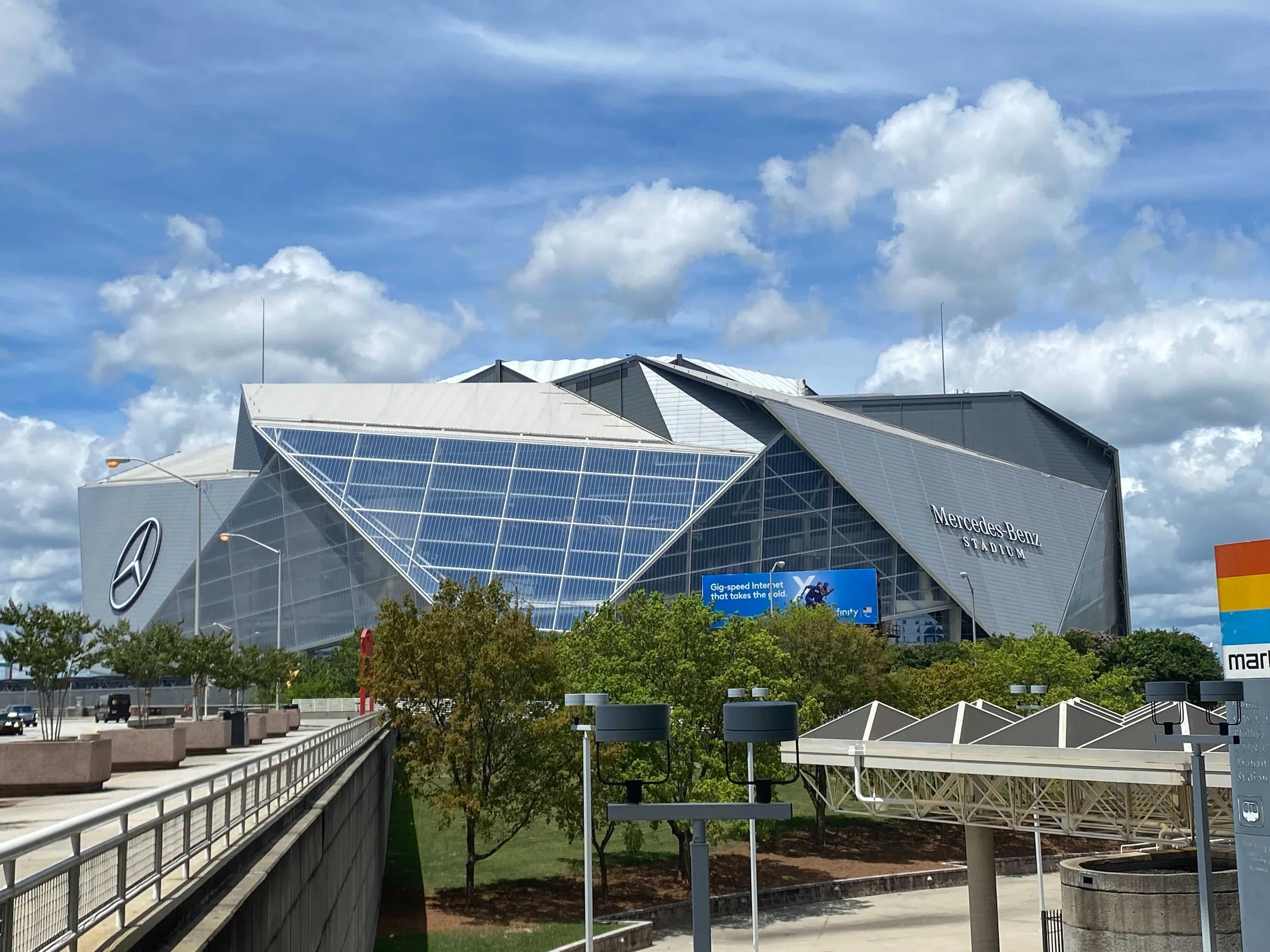
Known as Atlanta Stadium during the FIFA World Cup 2026™, Mercedes-Benz Stadium is one of the most technologically advanced and sustainable sports venues in the world. Opened in 2017, the stadium serves as the home of the Atlanta Falcons and Atlanta United FC and has become a global model for sustainable stadium design.
As the first professional sports stadium to earn LEED Platinum certification, Mercedes-Benz Stadium was designed to reduce environmental impacts while creating benefits for the surrounding community. Key features include:
LEED Platinum-certified design
Large-scale solar energy generation
Advanced energy-efficiency systems
Electric vehicle charging infrastructure
Urban agriculture and environmental education programs
Sustainability & Climate Highlights:
Solar Power and Renewable Energy
Mercedes-Benz Stadium is powered in part by one of the largest renewable energy systems integrated into a professional sports venue.
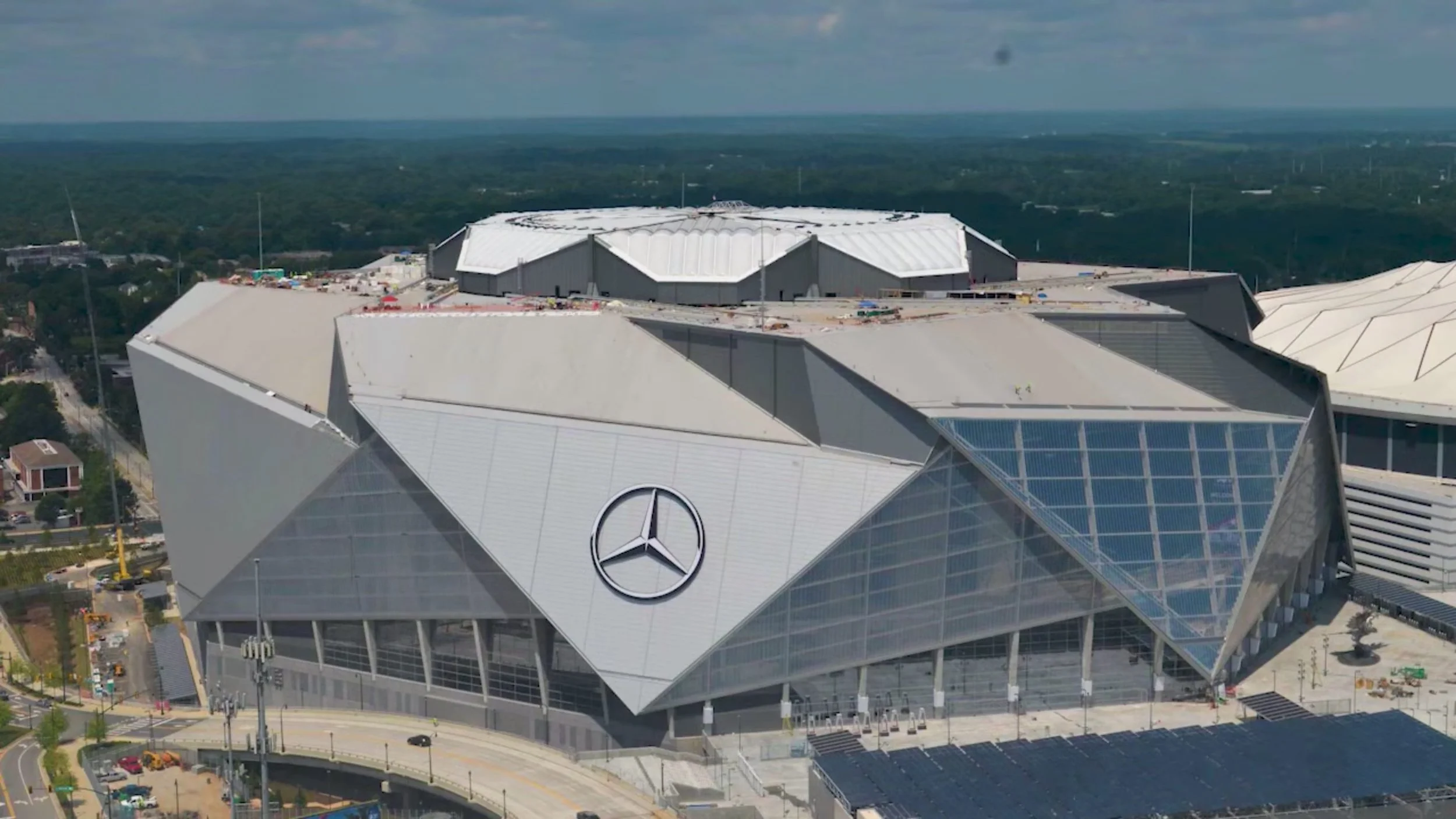
The stadium and surrounding Georgia World Congress Center campus feature approximately 4,000 solar photovoltaic panels, strategically placed on ticketing canopies, parking structures, and VIP entrances.
The solar array generates approximately 1.6 million kilowatt-hours of renewable electricity each year, enough to:
Power approximately nine Atlanta Falcons games
Power approximately thirteen Atlanta United matches
Supply renewable electricity equivalent to the annual consumption of roughly 160 Atlanta households
The renewable energy generated by the stadium also contributes clean electricity to the Georgia Power grid, helping reduce greenhouse gas emissions.
Urban Garden and Community Education
One of the stadium's most unique sustainability initiatives is its onsite urban garden and edible landscape.
Created as part of the stadium's LEED Platinum design, the garden serves as both a food production space and an educational resource for community members and workforce development programs.
The urban garden supports:
Food system awareness
Composting and waste reduction
Soil regeneration practices
Carbon sequestration
Programs connected to the garden help demonstrate how sustainable food systems and regenerative practices can contribute to climate solutions while improving community health.
Electric Vehicle Infrastructure
Mercedes-Benz Stadium also supports clean transportation through extensive electric vehicle charging infrastructure.
The stadium and surrounding Georgia World Congress Center campus provide charging stations capable of serving up to 48 electric vehicles simultaneously.
These charging stations help:
Encourage electric vehicle adoption
Reduce transportation emissions
Support cleaner mobility options
Increase public awareness of clean transportation technologies